



by Helaena Hutchinson
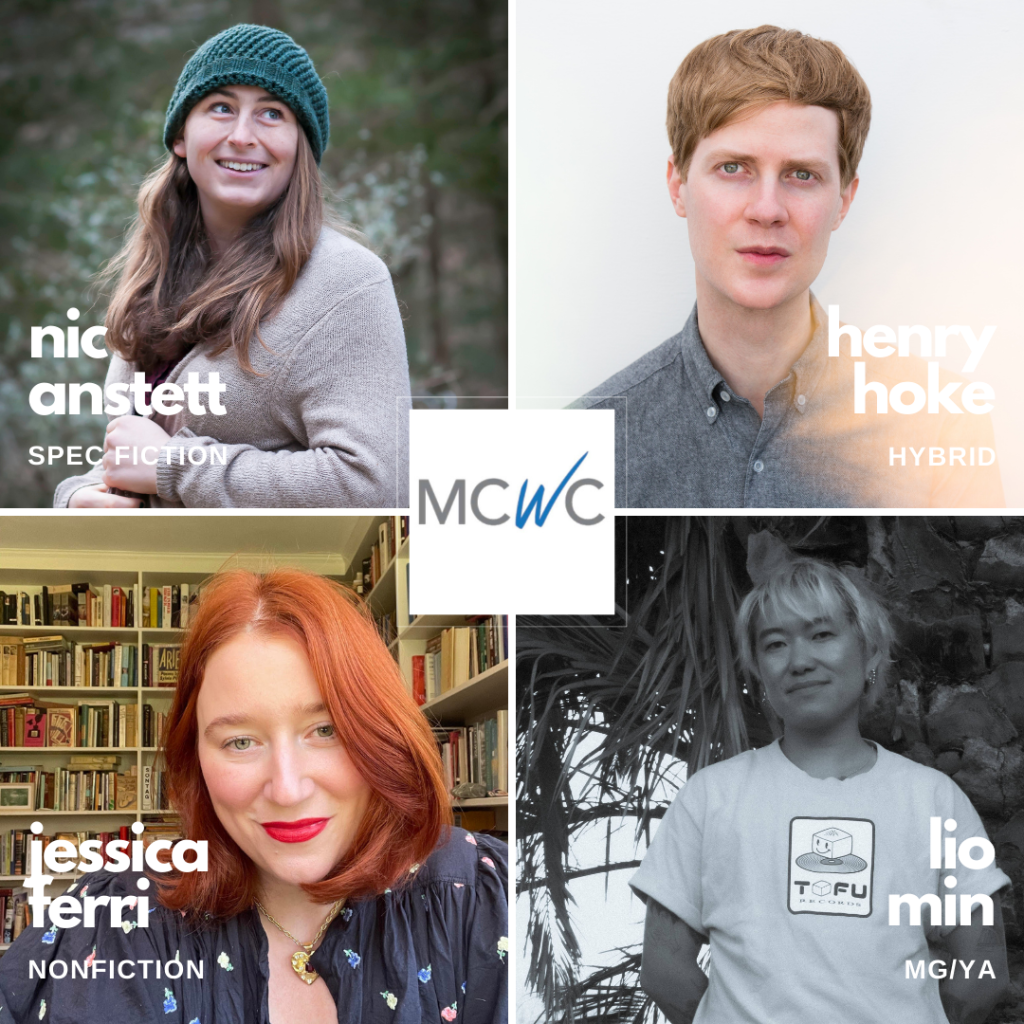
[Promotional photo for Mendocino Coast Writing Conference, featuring Nic Anstett as Speculative Fiction faculty.]
Professor Nic Anstett has attended multiple creative writing residencies to help inspire her and sharpen her skills as a writer. Writers of all stages come to residencies to collaborate, get inspired, and share tips with one another to improve as a writer. Coming to these writing residencies would be a perfect opportunity for young writers to meet and learn from other writers. Creative writing residencies can be in-person around your area or online so that people from far and wide can attend. Some offer other programs for writers to learn more, such as classes and other activities.
What is a Creative Writing Residency?
A creative writing residency is a special program that operates as a workshop for creative writers of every level to help sharpen their skills. They are able to provide programs to help a writer to collaborate, organize, inspire, and publish. Professor Anstett says that she “has attended multiple creative writing workshops and retreats such as the Clarion Science Fiction and Fantasy Workshop, the Tin House Summer Workshop, and the Lambda Literary Emerging Writers Retreat.” She also taught at the Mendocino Coast Writing Conference. Professor Anstett explained that they can last for a week to ten days, or even longer than a month depending on the writing residency. These organizations are usually run by literary nonprofits, but sometimes by colleges and universities. They can offer scholarships and literary classes to help support writers’ goals.
How do you get accepted?
The writing residency will allow you to apply to the program. Sometimes they will have a certain fee for a writer to be welcome into the facility. They often require you to share some information, such as what your goals are. They like to know what genre you are interested in. Professor Anstett says “Almost all creative writing workshops, retreats, and residencies are application based. Most request that you submit a sample of your best writing in a selected genre whether that be poetry, fiction, creative nonfiction, playwriting, etc. and a cover letter describing yourself and your goals as a writer.”
If the writer is accepted to a workshop-style residency, they will be assigned to a workshop group and will start their time discussing their drafts among other writers. The writers will be able to identify each other’s strengths and weaknesses. The writer will take the time to revise their drafts or edit others’ drafts. In the afternoon, writers will discuss other craft topics to help writers revise their work and will attend a reading to relax in the audience. At night, writers can be treated to karaoke, dancing, or other special events the writing residency has planned. It also builds an environment to clear any negative feelings when writers start collaborating among their peers during their work, and when they can take a break from creativity. The main purpose for these places is for writers to feel at home and improve their writing skills with others.
Who do you meet at writer’s residencies?
Professor Anstett explained that any writer at any stage of their career is encouraged to attend these facilities. At some residencies, undergraduate students, published authors, and emerging writers can be in the same group. From these groups she was able to build friendships and have mentors that support her craft and created long-lasting connections. She even states that she “got to take a literary course from one of her personal literary heroes’ courses and became good friends and attended concerts together.” Not only do these programs give writers the opportunity to learn about their writing but afford the time for writers to build networks as they continue to grow their skills. They are a safe environment for writers to communicate, make connections, and build professional networks.